

Dear guest,
I’m making it a point to begin these letters with the chit chat you would expect when entering the lobby of the grand hotel of the internet that is tPH. How has your stay been so far? Can I bring you something to drink?
The previous edition of The Lobby sparked interesting conversation, and it makes me véry glad to be your cultural concierge. Alas, have a seat and enjoy the following curation of hospitality trends and news.

Welcome to The Lobby, a roundup of what’s happening in hospitality, served with a point of view.
In this letter: LVMHs death drop, fashion is losing its footing in terms of cultural capital, the timing of Demna’s new Gucci campaign, American diner romanticism, and Nobu’s aggressive venture into branded residences.
Fashion giant LVMH experiences worst quarter on record. The company’s stock in Q1 fell 28%, something that the company did not experience even under the 2008 financial crisis. CEO Bernard Arnault consequently has a wallet that’s approximately $55.4 billion lighter. If the luxury industry hadn’t felt panic thus far, these results are sure to spark some, as LVMH is kind of treated as the indicator for the temperature of luxury as a whole. Other, converging factors such as supply chain disruptions and consumer spending tightening or migrating elsewhere are not ameliorating the situation. That said, we have just very recently witnessed what has been dubbed the creative director musical chairs, where many of the industry’s legacy maisons appointed a new conductor for the show – and quite possibly, the eventual effects of these refreshments may not yet have manifested.
Considering the above, it probably goes without saying that the cultural monopoly of fashion is declining as other categories have become significantly hotter. Highsnobiety’s new report mentions ”getting on the guest list for the latest restaurant or bar opening” and ”staying at the hottest IYKYK hotel” as the in-the-know signals of today, as opposed to owning the it bag of the season. We also got some fun stats such as 86% of respondents think being friends with the chef at the hottest restaurant in town is a green flag, as opposed to 14% thinking the same about someone who shows up to dinner with the latest item from a luxury fashion house. In other words, luxury fashion has lost its signaling power, and the reasons are many: Gen Z appreciates everyday items as signals, and the price hikes of luxury goods are oftentimes not backed by substance.
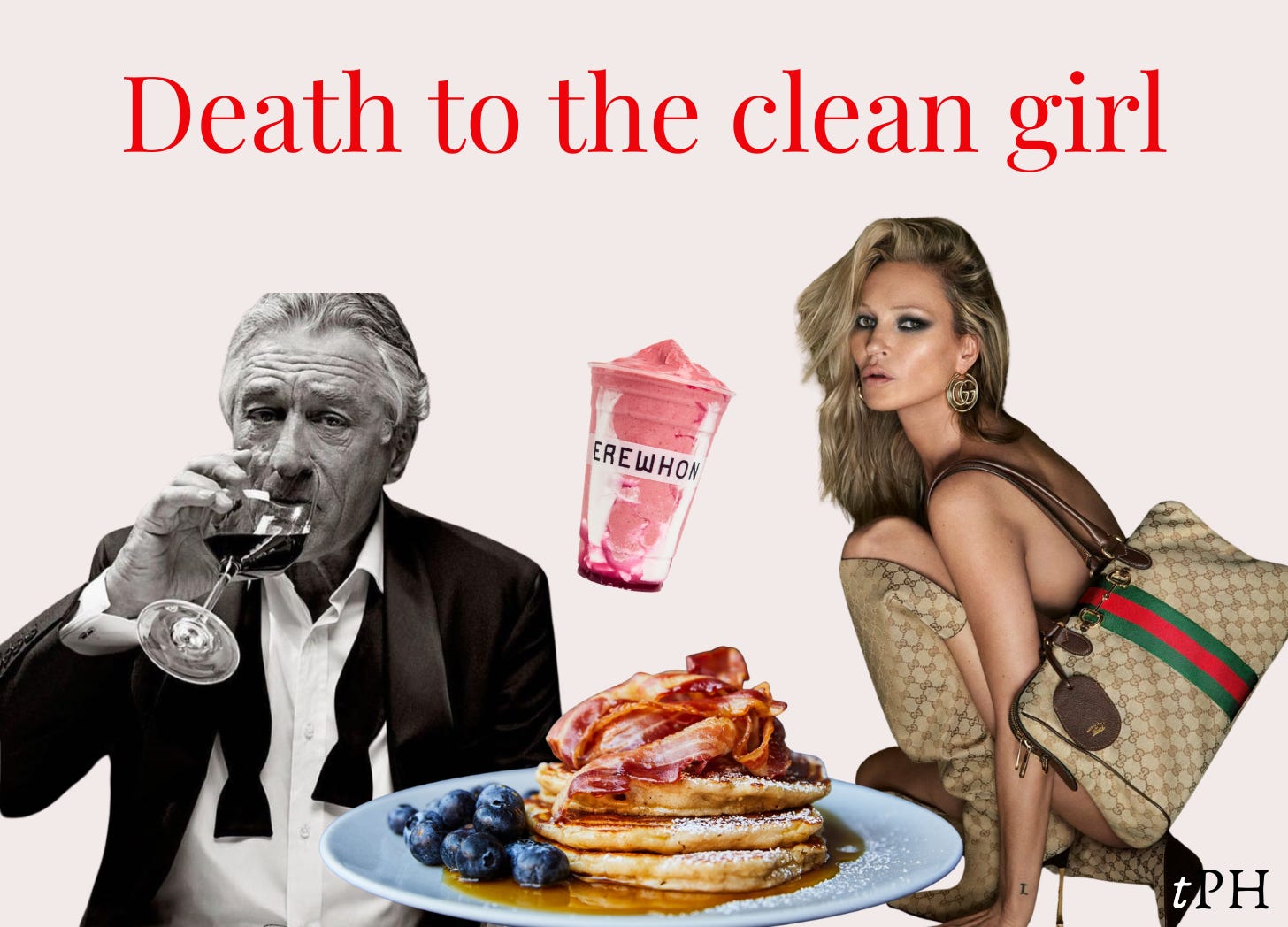
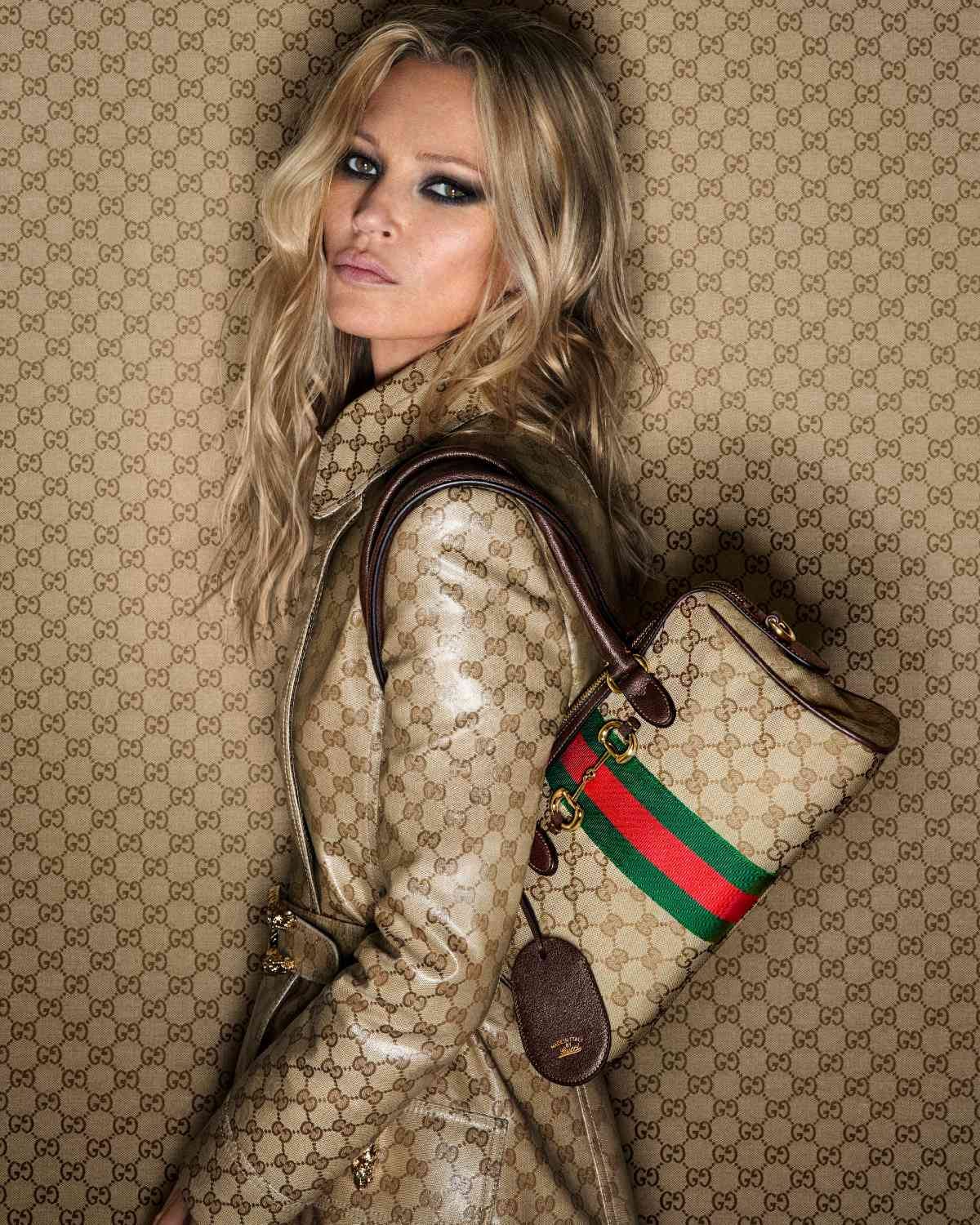
Another interesting point worth highlighting is that food and beverages have historically already had their signaling power (think caviar and champagne), but the effect is now extending to $20 dollar Erewhon smoothies and imported French butter (I’m looking at my sister who brought home air-vacuumed seaweed butter from Paris). Considering all of this and the disillusionment with luxury houses, the timing of Demna’s new Gucci campaign that is monogrammed to the gods is interesting.
Still, if we only look at the luxury industry in a silo, the editorial nods at 90s trashy chic and stars Kate Moss - yet another nail in the coffin of the clean girl interested in sleek aesthetics. tPH’s inaugural post dives a bit deeper into why I think hospitality is inheriting the mantle from luxury goods as the ultimate cultural signifier.


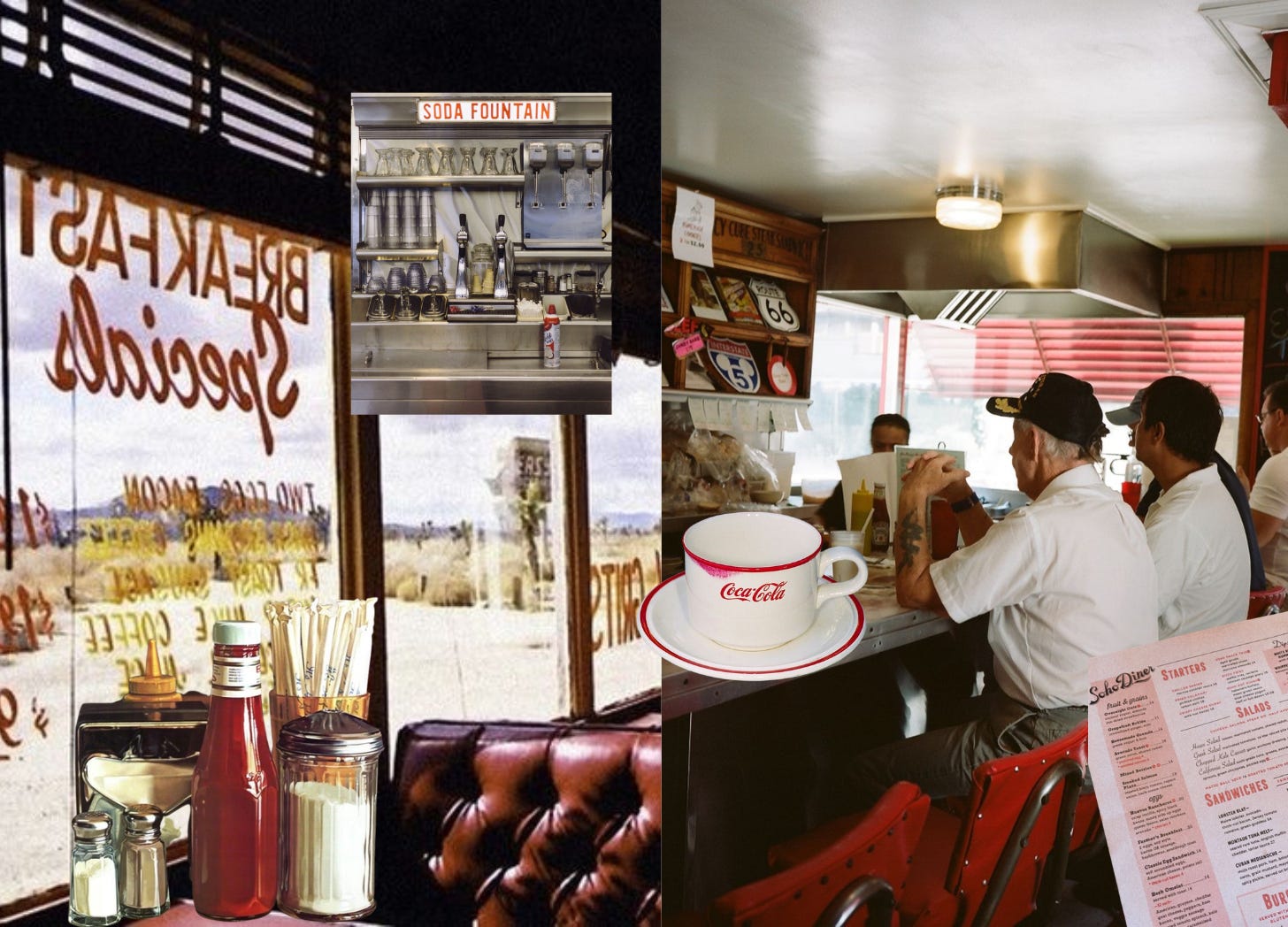
American diner romanticism is on the rise. The Financial Times recently ran a story about the resurgence of the classic American diner. Due to rising operation costs and inflation, many of these institutions have been forced to close down. But like FT stated, it’s not because no one cares for pancakes with bacon and maple syrup anymore (I know I do!). In fact, McKinsey reported that especially GenZ is into sit-down restaurants over other kinds of food experiences. Food quality and portion size are named as the biggest disappointments people face when eating at restaurants, and we all know that the classic American diner does not skimp on portion sizes!
I think leaning into romanticism and reinventing beloved concepts is a thing we will continue to see across the hospitality industry. Perhaps we’ll see more traditional hotel uniforms or a rebranding of the cigar lounge now that we have buried the clean girl?
Nobu bets big on branded residences with the pipeline of new properties extending from Mexico to… Manchester? In fact, Nobu is one of the fastest-expanding brands in the space when it comes to non-hotel brands. Also the Manchester plans are real, which is so interesting to me – Nobu is embracing a market that is not traditionally stamped as luxurious.
Many of these projects are not standalone and will be connected to upcoming Nobu hotels. I have to be honest - I’m still puzzled by the branded residences boom, and I keep wondering a) who are the people living in them and b) what happens to brand perception when the realities of a new build hit? I personally am a fan of the brand, and serendipiously met Chef Nobu himself at his Milan restaurant. And did you know that Robert de Niro is a partner and apparently the aesthetic brain behind Nobu hospitality? Very interesting.
However, while we know that branded residences can be a great move for brands in the short term (the price premiums are ridiculously high), I think the risk crumbling paint or lackluster amenities can pose to brand perception in the long term needs to be factored in. There is a way to do it well, but how many manage to?
We are moving away from ultra-polished picture-perfect aesthetics signified by the clean girl. New (but old) classic diners are popping up, and I think even more nostalgic concepts will make their resurgence. Brands that did not have their origins in hotels are betting hard on hospitality, and this is not a surprise considering how the cultural capital of a smoothie can now exceed that of a designer handbag.
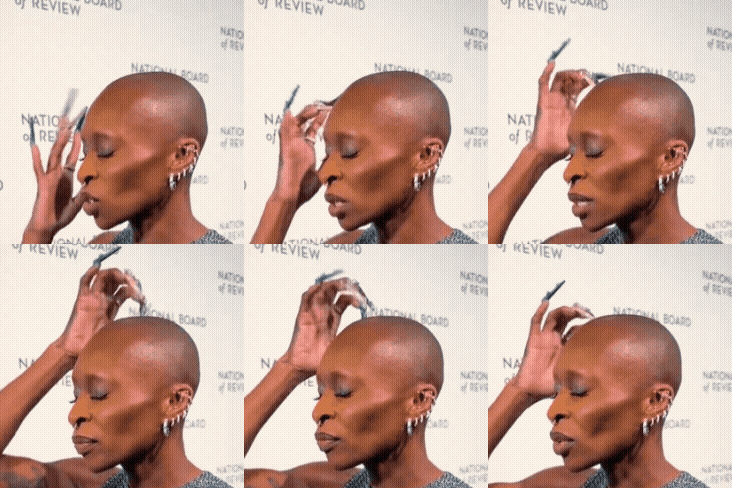
Me thinking about the increasing cultural capital of hospitality

Sharing what I’m reading, watching, or listening to; hospitality-related or not.
As we all know, hospitality does not just exist in the institutions of hotels and restaurants, but also (and maybe primarily so) in the home. And the unequivocal queen of building an atmosphere and hosting is Martha Stewart. I was around 10 years old when my mom got me a book with a compiled array of Martha’s crafts.
Mila of The Fashion Emblem enlightened me to the existence of the Martha Stewart documentary on Netflix, and it was fantastic. Less about her hosting skills, the focus of the film is on how she has been able reinvent herself again and again in the face of adversity. I love her and long live Martha Stewart.

A hotel that has been on my radar.
My sister-in-law recently told me she booked a two-week meditation and yoga retreat in Thailand. She explained that visiting the country properly has been one of those things that just keeps calling her and she has no clue why, so she finally decided to bite the bullet.
This conversation reminded me that I have my own unfinished business in Thailand, namely, that I need to visit the RAKxa Wellness Clinic.
Avid fans of this Bangkok property include supermodel Jourdan Dunn, and no wonder – RAKxa runs an intense af array of ultra-personalized wellness programs for any purpose, wether you want to detox, live forever, get snatched, or all of the above.
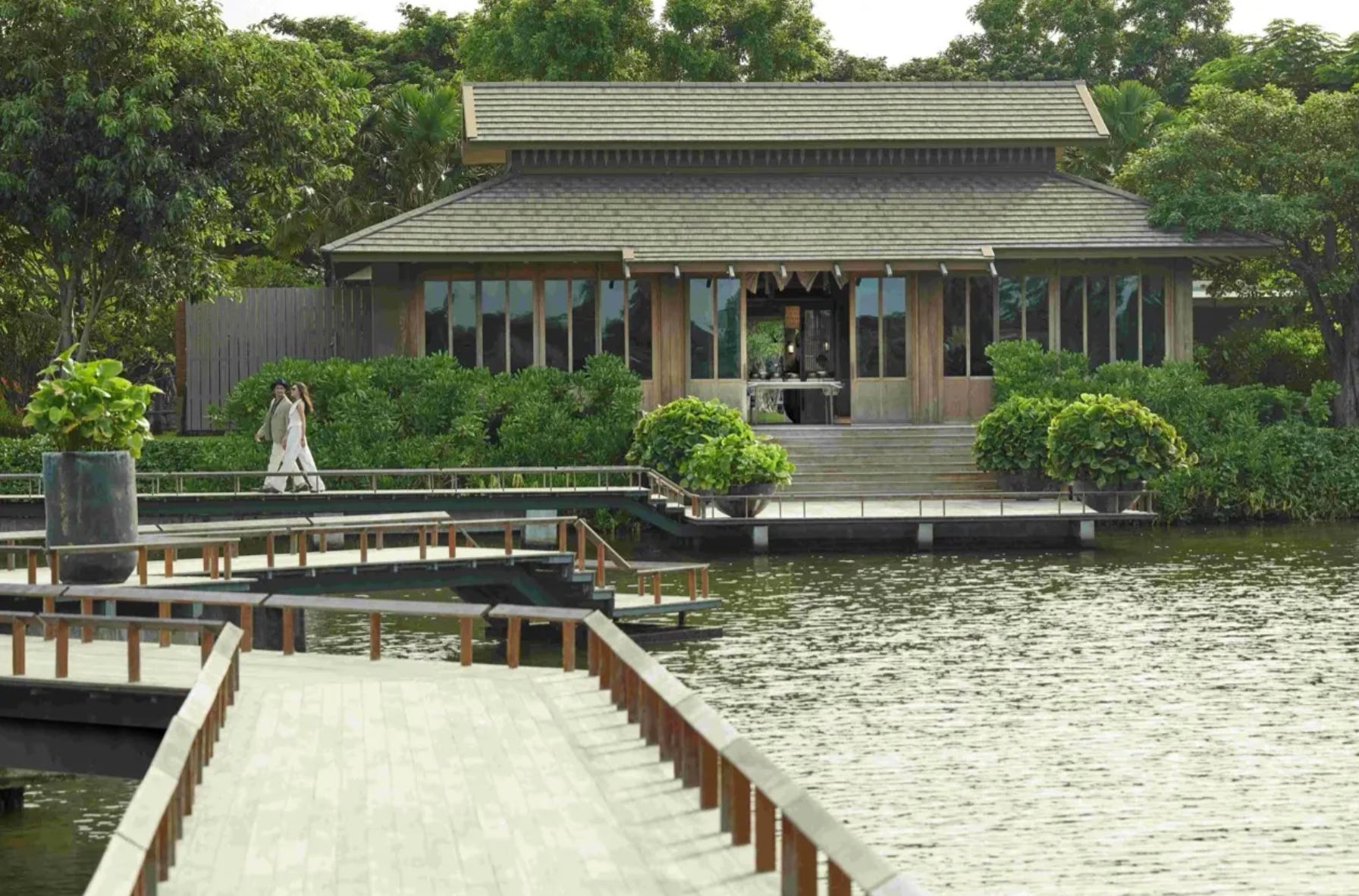
As the wellness and longevity travel economy is becoming an ever-hotter topic, I think the appropriate thing to do would be to fly over and do some tPH coverage. (RAKxa also runs a spa in Florence, maybe I should check that out first during my trip to Italy this summer? Eep!).
That’s all for this edition of The Lobby. Thanks for stopping by.
🔑 Emma
another great debrief. re: white lotus — just spent a birthday at esalen institute and it’s like a spiritual white lotus. highly recommend.
First up, my Schadenfreude always gets a little giggly when LVMH underperforms.
But secondly, I remember a documentary on New Jersey diners recently that are essentially institutions and honorary community members themselves. The owner of one of them was genuinely saying that once he’s gone, it’s very likely that so will the diner and it’s so heartbreaking to see a staple of a culture get torn down