

Dear guest,
I had something completely different in mind for this week’s letter, but I came across this piece of hotel news:
In short, Hilton is launching its new longevity-oriented spa offering which is planned to debut in January 2027 at Signia Hilton Indianapolis.
Now you’re like ’ok Emma, an entire newsletter because Hilton something wellness something?’
Let me explain!
Hilton buying into the very much in-demand wellness optimization boom gives me uncanny-valley vibes. The mockup image could be from any spa; they all look the same. The programming of infrared, sauna, cold therapy, and a soundscaped lounge is also very copy-paste.
This predictably is to be expected from a global brand such as Hilton. In fact, it’s a function of being a global chain to produce something scalable and palatable. But does it always have to mean unexciting choices?
Welcome to The Reservation, a tPH letter including long-form analysis and cultural criticism of the hospitality industry and relevant trends
In this letter: SHEIN vs. Marriott, lack of integrity, and hotel brand inflation.
Are global chains the fast fashion of hospitality?
The fast fashion giant SHEIN adds more than 7,000 and up to 10,000 new styles of clothing to their site per day1 and has, like many other fast fashion companies, built an empire on the principles of:
volume
consistency (hey, at least you know what you’re getting is not great)
global reach
Marriott International operates over 10,000 properties under 30 of their proprietary brands.2 Oh and would you look at that, the same principles apply.
Global hotel chains and fast fashion have a lot more in common than you would think, as in one way or another, both have democratized the business they are in. Fast fashion made clothing affordable, and global chains made the hotel experience consistent and widely available.
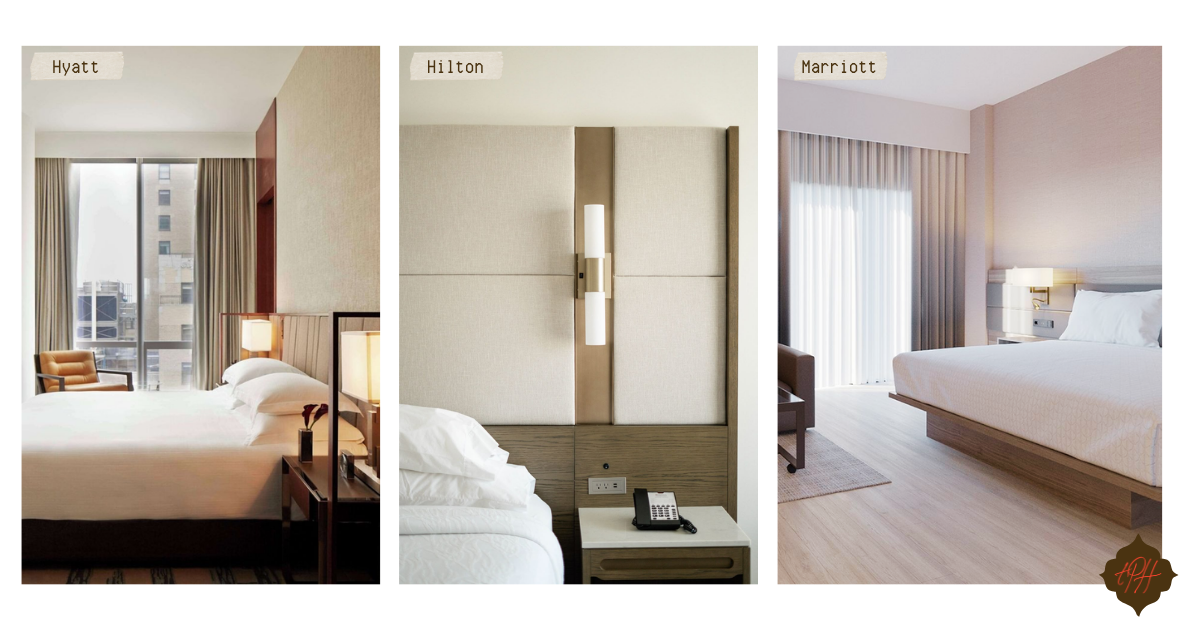
However, we all know that with the birth of fast fashion, something died. Call it integrity or meaning, it doesn’t really make a difference. But is hospitality suffering the same symptoms?
Diagnosing the hospitality industry
Here are more parallels if the above wasn’t convincing enough.
1. Mass production of identical products available in every market
A Hilton in Tokyo and a Hilton in Madrid will offer essentially interchangeable experiences, and the same is the case with the offering at the Zara in Stockholm and the Zara in São Paulo.
2. Trend-chasing without original design DNA
Boutique hotels were the OG properties selling lifestyle, and when the big players caught on, the distinctively global chain -backed lifestyle hotel category was born (you know my feelings about this by now).
I think Moxy (by Marriott) and Canopy (by Hilton) are the hospitality equivalent of H&M’s conscious collection where something that’s fundamentally standardized and not conscious gets a surface level facelift. Personality-washing?
3. A race to the bottom of labor
Fast fashion is built on exploitative supply chains, and luckily, this is not (always) the case in hospitality. THAT SAID, there is a chronic underinvestment in people in the industry with come companies publicly stating that salaries are their biggest challenge.
4. Perhaps the worst of them all: disposability
Fast fashion produces garments that are in and out of your wardrobe as fast as trends are – and we know how quick the trend cycle has gotten.3 The brand portfolios of global chains are starkly expanding, to the point where both guests and investors alike are left asking, what is the difference? These brands can offer experiences that are correct, clean, and functional, but at the same time utterly forgettable.
Also, from an investor perspective, if a brand has been created based on a trend, you have the literal worst hedge against the very likely event that mass consensus of what’s ‘in’ changes, an event which continues to occur faster than ever. When you and your competitor have 30 brands each, none of them can have a distinct identity in any meaningful way, not least because identity requires some level of constraint and *gasp* risk.

Why global chains are not the fast fashion of hospitality
Told you, there would be reflection.
Hotel chains employ millions of people worldwide and provide stable careers and transferable skills in an industry where independent properties often cannot offer or guarantee that same security. Hilton has been named the best workplace in the world multiple times.4
They invest in technology and sponsor some of the most impactful R&D in the industry (I’ve seen hospitality startups get life changing deals with them), build sustainability infrastructure as levels of reporting are completely different at that scale, and train staff at a scale that is incomparable to an independent property.
And newsflash, also brands like the Ritz-Carlton and Four Seasons are owned by global chains. Four Seasons, despite being a global brand with nearly 130 properties has managed to maintain a level of service consistency that is quite remarkable, and is one of the best examples of “real” hospitality at scale that’s out there.
Furthermore, there is good design in global brand hotels, especially when we get closer to the luxury segment.
Yet, brand portfolio Crown Jewels like these are the exception, not the rule, and they do it by growing slowly with some level restraint and intention.
Global chains are not inherently bad, but I have real concerns about the sustainability of the current growth model of, say, 30 brands, 10,000 properties, pipeline announcements every quarter, loyalty programs, and the commodification of guest relationships.
I’m concerned that we may be following the same trajectory of fast fashion: growth for the sake of growth, and at the expense of meaning and substance.
The consumer has caught on
The signs are everywhere, my friend.
There is already a rising traveler preference for boutique and independent properties5, and Substack newsletters (such as this one) focused on hospitality criticism are carving way from traditional, run-of-the-mill listicles of hotels.6 And it is not only the midscale brands that are under scrutiny; Bloomberg has called luxury chains ‘cookie-cutter’.
In the realm of fashion, the backlash against fast fashion produced the movement of slow fashion that’s traceable, ethical, and above all else, intentional.
I think we’re on the cusp of something similar happening in hospitality. Slow hospitality, if you will (Forbes called it ‘deep luxury’ here). Whatever you call it, real hospitality cannot exist without intention, and properties that prioritize depth and personality over breadth and consistency are just that; living and breathing, and filled with awareness, the prerequisite to intention.
A little strategic imperfection is more than welcome, as highlighted in this piece by Shaurya. Why?
“The human brain is very good at remembering things that are novel or unexpected. So when the pattern is broken - when some otherwise basic detail is ‘reinvented’ - we remember.” – Jeffrey Fenton in Suite Things
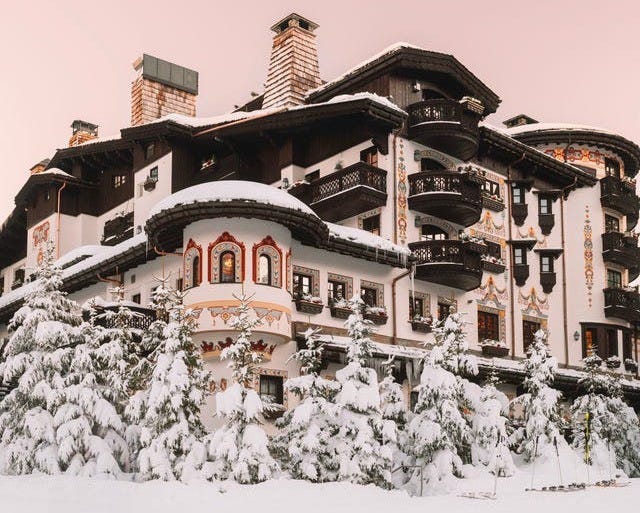
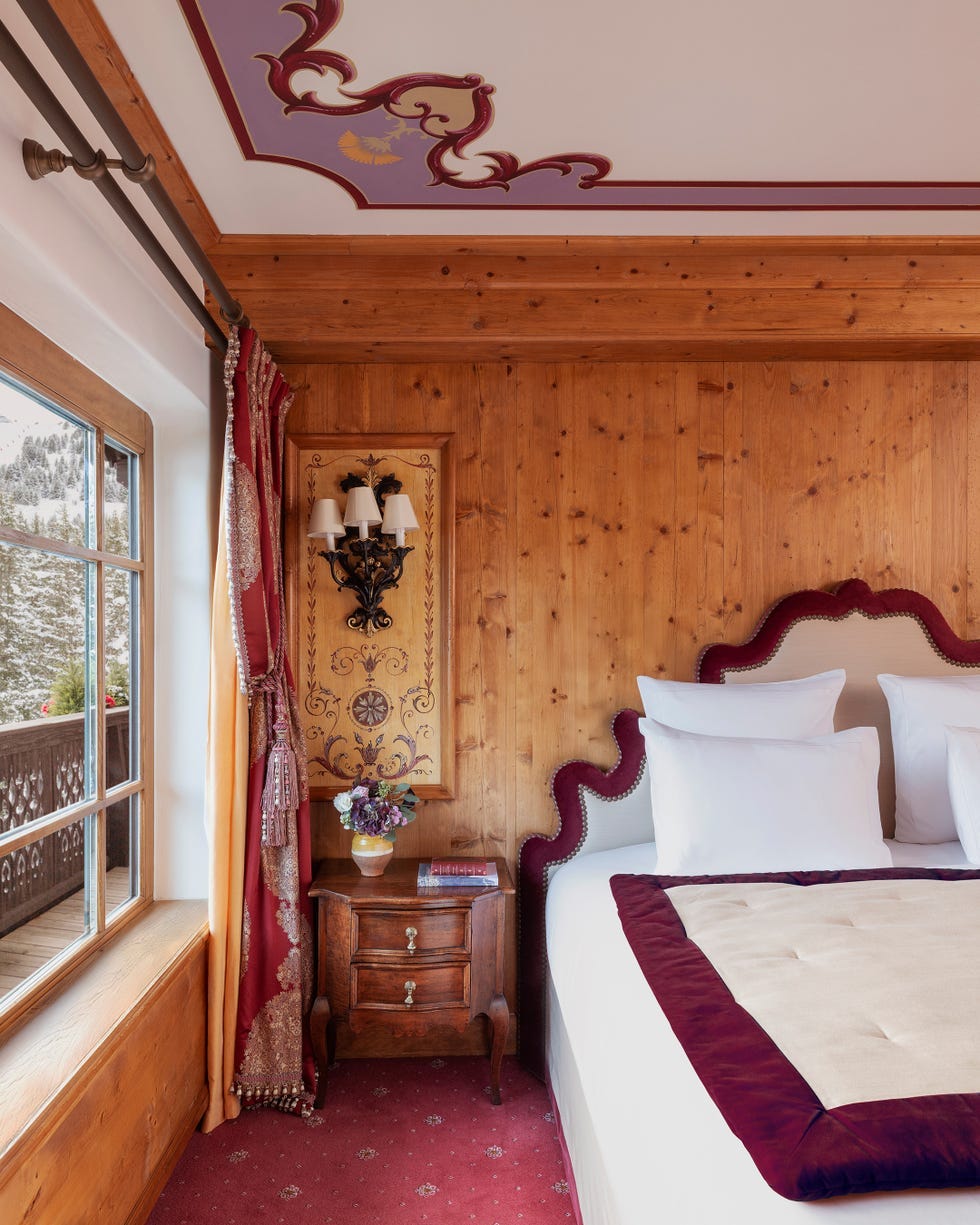
This is why people LOVE properties like Passalacqua or Airelles’ properties. The level of detail that these properties have gone to build their world is absolutely unparalleled (Zoe Schaeffer wrote an excellent list of more hotels that fall in this category here).
Conclusion
Just kidding, there is no real conclusion, just thoughts.
I think the industry as a whole could use some awareness. And I would encourage global chains to take a risk, introduce something unprecedented, hire a young, forward-thinking talent into your strategy team.
Sure, you think your investors will protest and want to cater to ‘real’ demand metrics. But trying to tick all those boxes leads to something so generic people would rather risk inconsistency by staying elsewhere.
All of this because I wish Hilton did something a bit more interesting with their recovery and wellness concept. Beige is not the enemy, but picking beige just because everything else is beige is a cop out.
As always, I really want to hear your thoughts.
Thank you for coming to my ted talk,
🔑 Emma
Really interesting parallel! Enjoyed reading this
It does make me think … in what other ways can we increase accessibility of experience. Of attention to detail. Of the feeling of walking into an Aman hotel at the beginning of a trip. Of the care put into every element of the experience.
I’ve been contemplating this recently and your article gave me such an interesting angle to view it through.