

Welcome to The Reservation, a tPH letter including long-form analysis and cultural criticism of the hospitality industry and relevant trends.
In this letter: the private members’ club market is still growing, a brief history of the sector, the Soho House story, and how to open the best private members’ club ever!
Earlier this year I was in Verbier and walked past 67 Pall Mall’s alpine outpost, which is a wine-focused members’ club with a collection of 3,000 bottles and a gym that caters to professional (après) skiers.
CHF 2,500 a year to join, CHF 600 if you’re under 25, but as with many clubs, you can’t just buy your way in. Oh no nooo. Member candidates require a ‘proposer’ and ‘seconder’ from within the club’s existing membership.


Each day that I made my way to the slopes I saw fur-clad, rather glamorous alpine ladies enter the doors and be greeted by a uniformed concierge offering them coffee at the door.
Seeing this got me thinking about the explosion of private members’ clubs and what it means for hospitality at large.
Let’s talk about it 🔑
What are private members’ clubs actually selling?
At their most basic, private members’ clubs are social and increasingly work spaces and facilities (e.g., wellness) that you pay to access.
But such a reductive description misses the main selling point, which is curation of the space, of the cultural programming, and perhaps most crucially, of the people sharing the space with you.


As Vogue Arabia demurely put it, a certain standard of company and caliber of conversation are expected at a private members’ club. Without the promise of a certain lifestyle or community, the offering would be essentially glorified coworking (and we know that doesn’t pay off).
The promise of being a member is that the person sitting next to you is interesting, accomplished, or at the very least, vetted.
Now there is an issue with this promise, which we will tackle later. But first, some numbers!
The private members’ club market size and growth
More private members’ clubs have opened in the past four years than in the three decades following the 1985 opening of London’s Groucho Club1. The pipeline of prospective openings is the largest it has ever been.
The global market is projected to nearly double to $59.1 billion by 2033, growing at an annual rate of 7.2%. The sector grew at 11% annually through to 2027, at which point it was valued at $25.8 billion.2
And the effects extend beyond the clubs themselves. Properties within a 15-minute drive of Soho Farmhouse in the Cotswolds saw buyer interest more than double in August 2024, with 2.3 buyers registering for every one buyer in adjacent areas.3
Houses within a mile of prestigious clubs sell 2.5 weeks faster than comparable properties five miles away.
The buyer profile is different too, more international and affluent.
Three waves (a brief history)
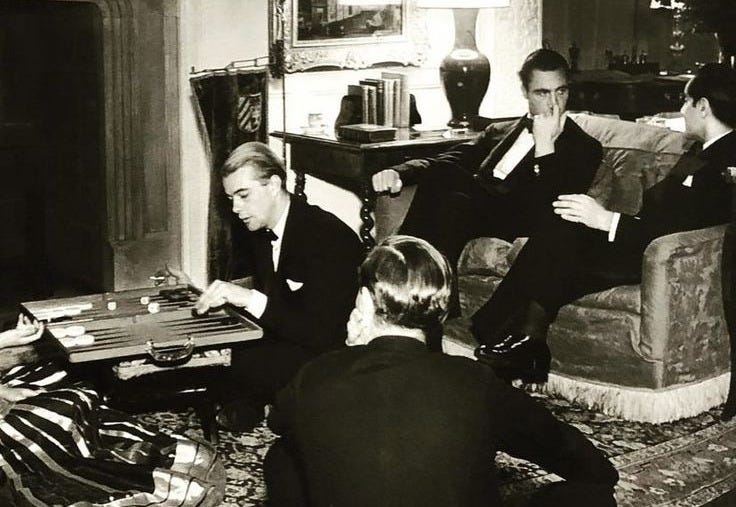
Back in their naissance, traditional gentlemen’s clubs were for people of position, power, and wealth. Think University secret societies and men with big moustaches smoking cigars.
In 1985 The Groucho in London was the first to open its doors to members based on other factors than money or title. Interesting and credible people, especially from the arts world, were welcomed.
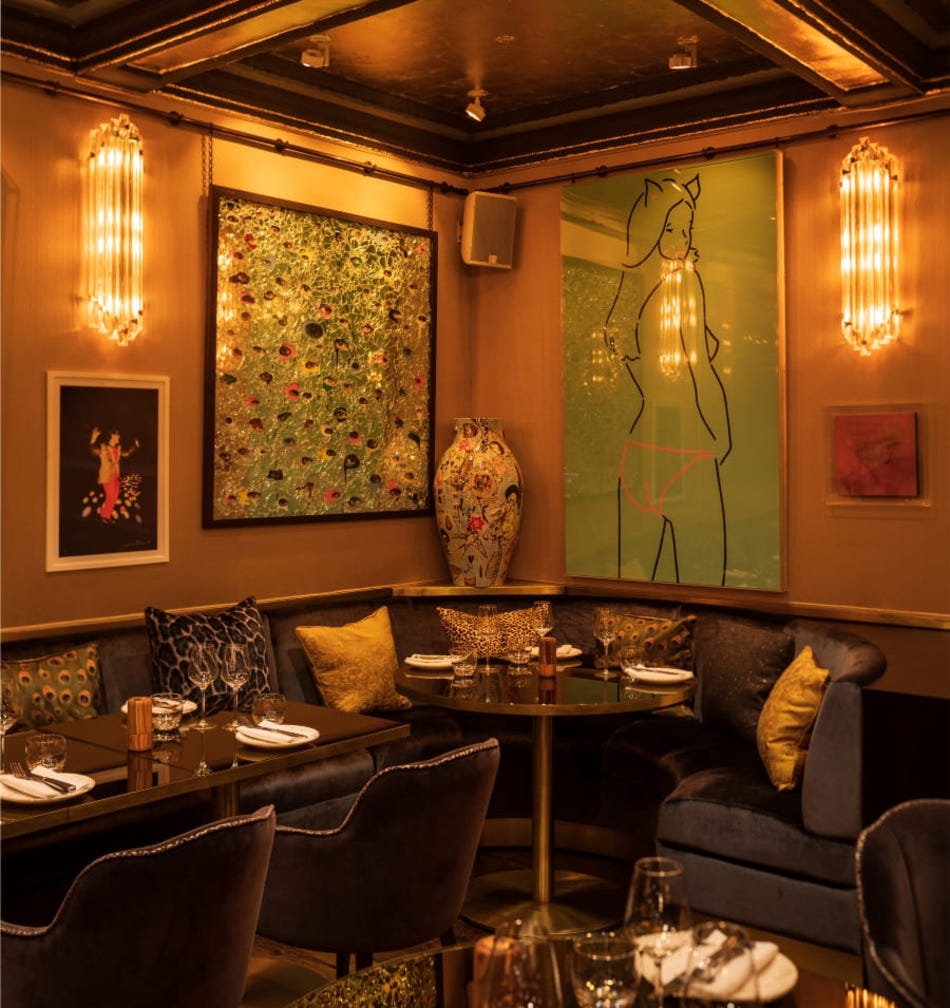
Then Soho House in 1995 took this idea and ran, scaling it globally, adding creative professionals to its pool, and in doing so turning a somewhat niche corner of hospitality into a billion-dollar industry.
Now we are arguably experiencing the third wave of private members’ clubs, and the types of clubs have proliferated wildly.
There are super luxurious ones like Aman in New York, hyper-local ones that are embedded in the surrounding neighborhood like The Dally in London’s Islington, clubs tailored for tech entrepreneurs, clubs for longevity-junkies (quite the oxymoron).
Wellness clubs, also called the Gen Z equivalent of the country club, such as Equinox and Remedy Place are an especially interesting category that with the longevity boom will see a stark rise in demand in my humble opinion4.
Do to peaking demand, mixed-use developments now routinely integrate members’ clubs alongside hotels and residences. The subscription economy has officially infiltrated every corner of our lives, and hospitality is no exception.
The Soho House question (yes, we are opening this can of worms)
Can Soho House redeem itself?
While the company has almost become synonymous with the private members’ club, it has faced a lot of controversy.


Soho House went public on New York Stock Exchange in July 2021, valued at nearly $3 billion. The entry pitch was exclusivity, lifestyle appeal, and a strong pipeline with the aim of opening 7 clubs a year.
Putting quarterly performance and growth pressure on a business model based on exclusivity and curation is not the most harmonious equation.
In 2023 the member pool of Soho House had grown to over 250,0005 and 40 clubs (vs. just 150,000 members and 33 clubs in 2021), leading to dissatisfied members circulating letters accusing the company of a “spreadsheet culture” and a “creep toward corporatism.”
Following the outrage, the company had to temporarily stop accepting new members in its more popular locations such as New York and London.
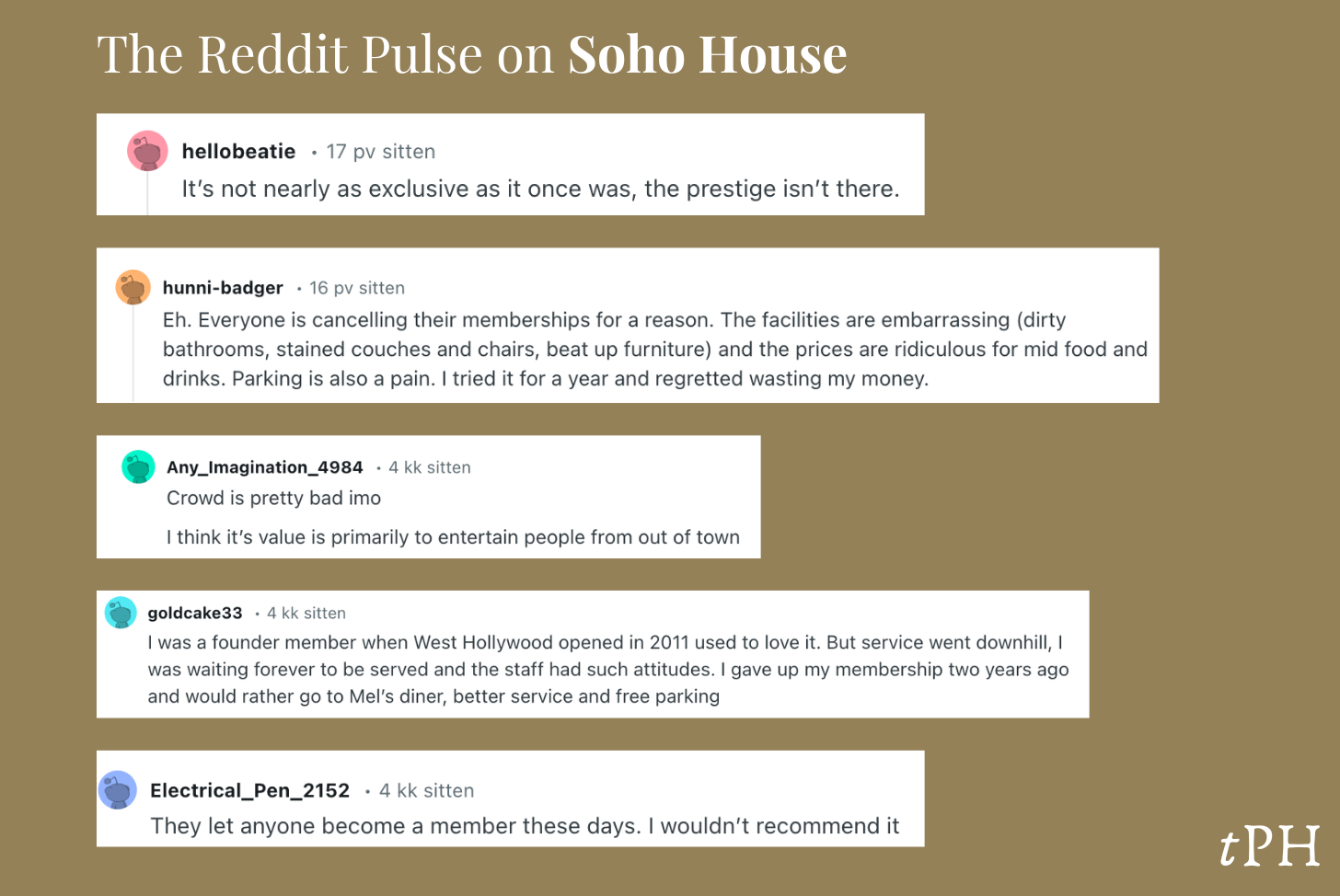
(On a further note, the company has been in operations for the past three decades and has never managed to turn a profit).
Now most of you know that Soho House has been taken private, away from the rising pressures of the public market at a share price far below its IPO level (we took a look at this in this edition of the Lobby).
The question remains if the sector is fundamentally unfit for scaling. Soho House showed that the pursuit of commercial success makes the club worse, because optimizing for growth (i.e., opening the doors for more members with less scrutiny) dilutes the exclusivity that people paid for.
As Jamie Caring puts it in this report:
“If you go into the club world to make money, you are concepting it back to front. Clubs are about culture and community, not commerce.”
Does this sound familiar to you guys? Isn’t this the exact same dynamic we see in luxury goods, namely the juxtaposition of scale versus actual substance (previously discussed here).
And just like in luxury, the clubs that chase growth at the expense of their soul will find their members making an Irish exit and opening their laptops somewhere else where the atmosphere is cooler and the people are more interesting and the food is better (Nadine @ The Stanza, who’s a member of Casa Cipriani, mentioned in this interview that F&B programming is one of the most important things a members’ club needs to get right).
Is the growth of the private members’ club sector sustainable?
As established, the market is projected to nearly double in the next decade but we have already seen massive growth pains à la Soho House. Do we really expect the situation to get any better when the market is getting flooded with options?
If everyone and their mom is selling access to a curated community, the word curated becomes a non-word (just like luxury, which means nothing anymore).
Selling access seems to me an inherently fragile business model when exclusivity is the final product; because the more you sell, the less exclusive it becomes by definition. The more clubs there are, the easier it is for members to hop from one to the next chasing the moment i.e., the newer, cooler opening.
I predict that retention will be the real challenge of the industry, because for members to become rooted in their chosen club requires a bit more than a picturesque bar and bespoke speaker lineup (this reminds me that I’m going to Nordic Business Forum this year!! Anyone else?).
I wish I could refrain from sounding like a broken record, but if a private members’ club were to become lucrative and sustainable in the business-sense, then it has to embody the genuine care, attention, and sense of belonging of hospitality.
Speaking of belonging…
Join Sarah Spoto, Sierra Blake, MPS, LADC, Longevity Law and I for a very special webinar where we explore the intersection of hospitality, safety, community, and culture.
We’ll share practical insights for creating spaces that people want to return to.
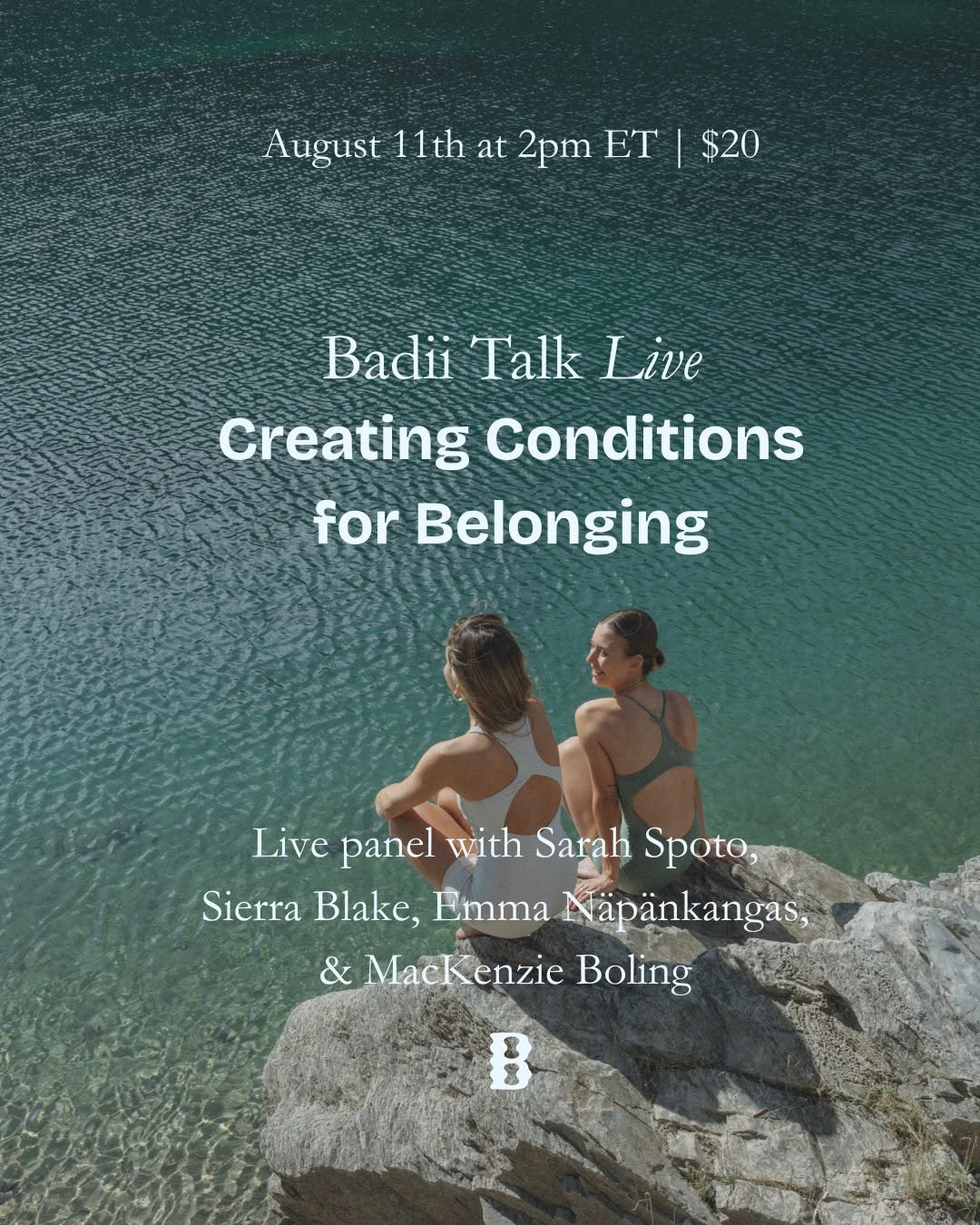
If you can’t join us live, register anyway and we’ll send the recording your way 🐬
11th of August 2 pm ET on Zoom
The key 🔑 takeaways
Do we realize that private members’ clubs are commercializing belonging in an increasingly lonely and disconnected world (how many times have you read a sentence like this in the past year? My sincere apologies for throwing another one at you). But on a larger scale, I’m afraid it’s not something we can commodify.
What I think WILL and DOES work:
Small-scale clubs that have minimal to zero marketing outreach aside from word-of-mouth and organic reputation. Chez Margaux in NYC comes to mind.
Clubs that have a specialized offering and do not solely rely on member curation. Wellness and longevity-focused clubs are a prime example, because people will still get the value out of their membership getting specialized treatments or having a sauna session even without a tech CEO seated next to them. Others are food-focused private supper clubs.
Exceptional hospitality and service excellence will remain a differentiator and unique selling point. As rumor has it, the service quality at more established locations has gone down. Prioritizing a high standard of service and hospitality without compromises will resonate with members paying a high ticket.
That’s all for today dear readers. What do you think? Are you investing in private members’ clubs? Are you part of one? You can comment or reply to this email directly with your thoughts.
Already looking forward to next week,
🔑 Emma
Claim based on vibes
Number includes, in addition to standard Soho House members, members of Soho Friends, Soho Works, etc.
This was a really insightful piece. On a very very very micro scale, I’m a part of a book club and a supper club with some very cool and connected people. I get asked OFTEN how I got invited, or if we’re accepting new members (which is always funny to me, it’s not that exclusive! We’re pretty open to people joining!) but it’s made me realize that you don’t need to pay a membership to have access to cool people on a regular basis. Anyway. Loved this piece thanks for writing it!
As a former member and Soho House employee, I just can’t with the constantly being SCOLDED like a child for minor infractions. There’s no sense of generosity and everything just seems like a money grab. There’s vibe is pretty unwelcoming and the crowd is very bad