

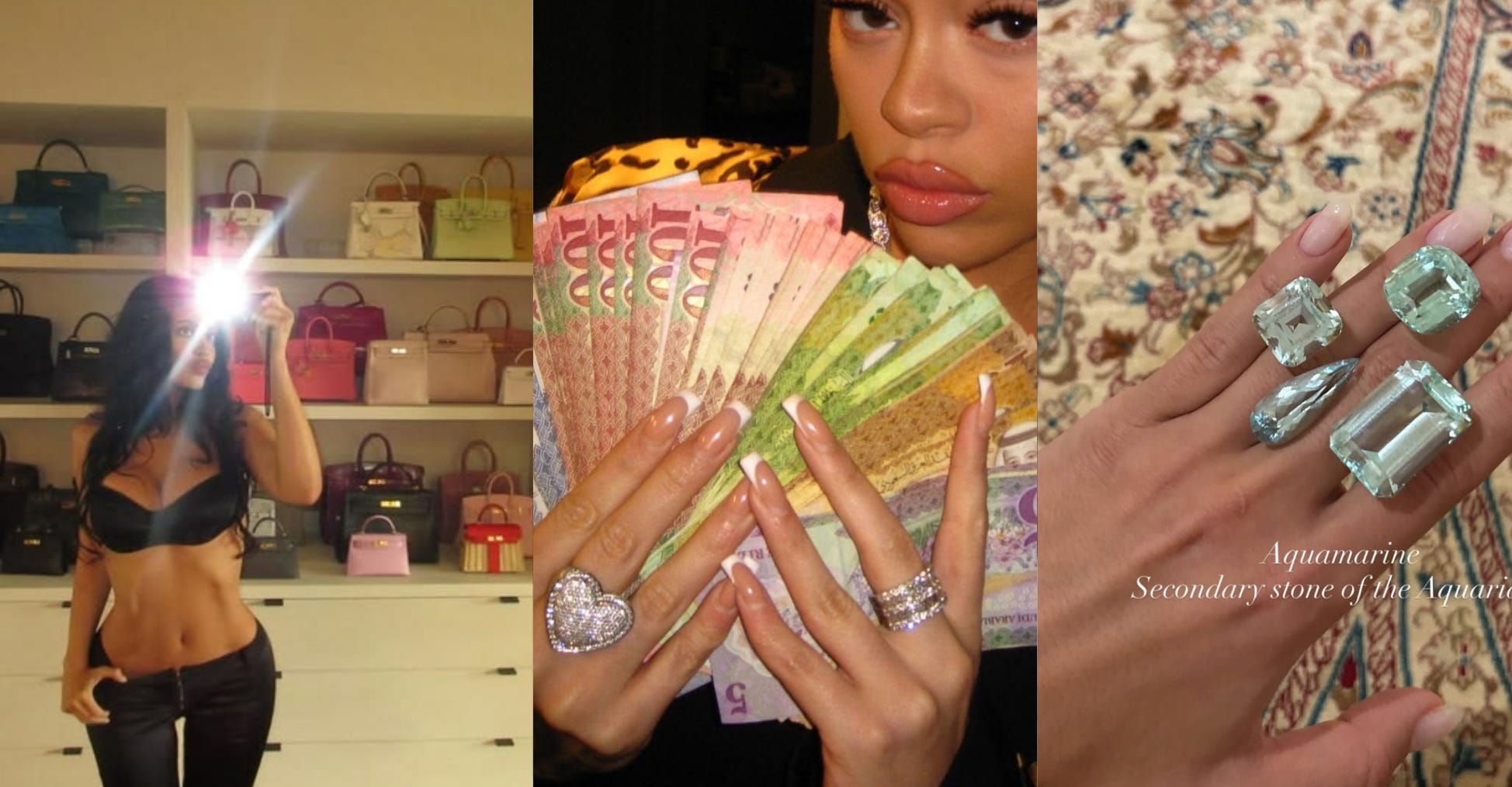
Welcome to The Reservation, a tPH letter including long-form analysis and cultural criticism of the hospitality industry and relevant trends.
In this letter: luxury economics 101, luxury as price vs scarcity, the human as luxury, and Spinoza.
Dear guest,
Luxury, luxury, luxury, LuxUrY…
As someone who is deeply embedded in the hospitality industry from quite a few angles – through developing, consulting, writing, researching, interviewing, concept creating, to name a few – it is hard to escape the nagging presence of the idea of luxury.
In most cases it’s a question of pricing – how do I position my product / service in a way that makes people pay as much money for it as possible?
But in others, it’s a question of scarcity – what is becoming so exceptional and rare, that coming across it feels like a reunion with the Good?
This week, let’s look at both approaches, throw some philosophers in there, you know the drill.
Enjoy!
Why do we pay so much for luxury?
A lot of the allure of luxury for investor, owner, and consumer alike comes from the price tag, even if we like to think the desirability of luxury products comes from other things.
Still, how luxury pricing works is tied to the very definition of a luxury product.
Almost every product on earth follows the same logic of raise the price → sell fewer units, but luxury products have a very wonky-looking demand curve, which seems to bend the basic rules of economics:
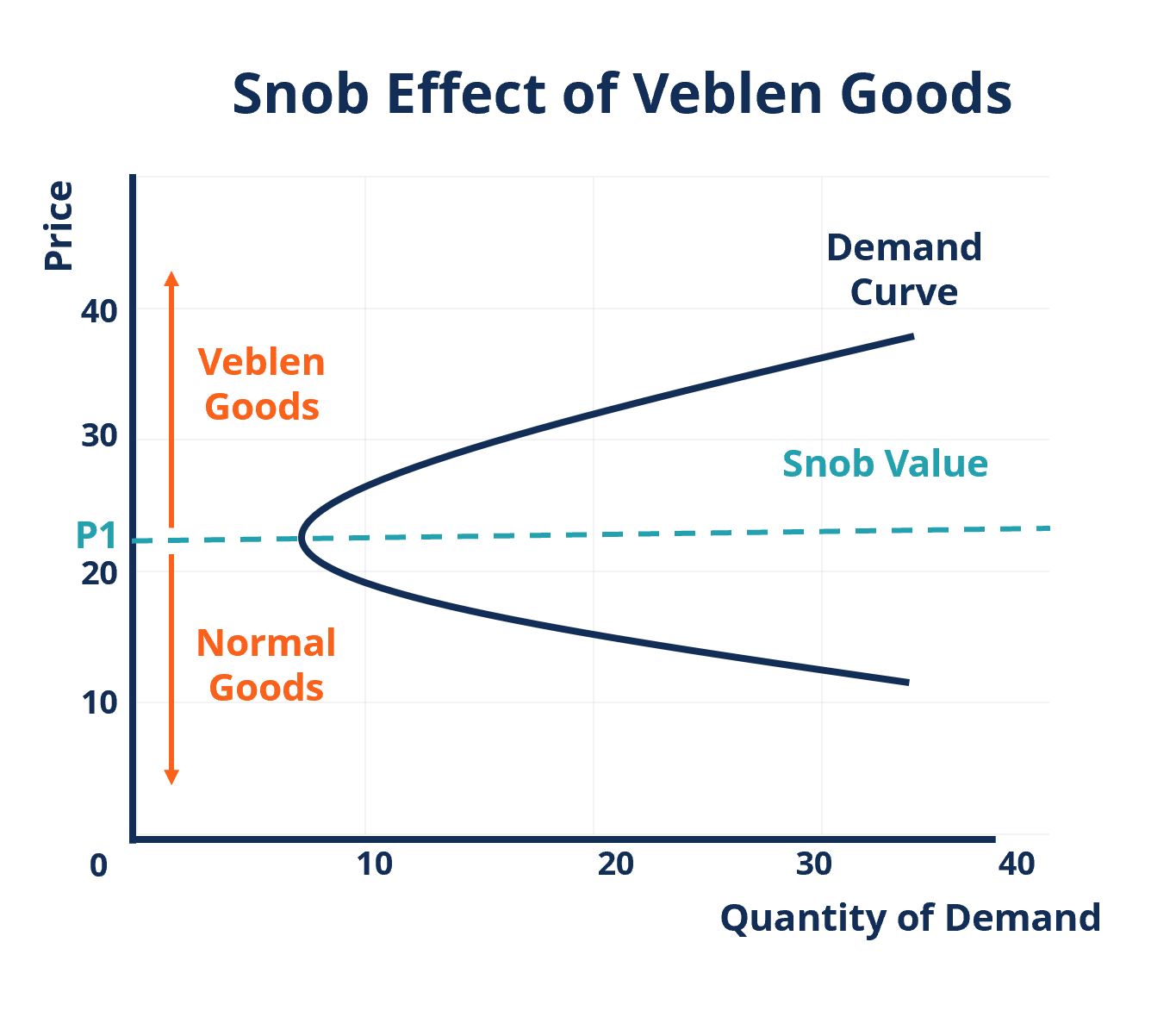
Below the dashed line (P1, also called ‘snob value’ here), luxury products are like any other, where the cheaper it gets, the more people buy. Above the snob value, however, the curve slopes upward, meaning the higher the price, the more people want it.
In short, there is an invisible threshold beyond which a high price makes the product more desirable.
Products that behave like this are called Veblen goods, named after economist and sociologist Thorstein Veblen, who’s also behind these fantastic terms:
conspicuous consumption: spending not to use something, but to be seen being able to afford it.
conspicuous leisure: proving your status by visibly not having to work and an existence that revolves around the finer things in life (which is exactly what we are larping at luxury hotels, amirite?).
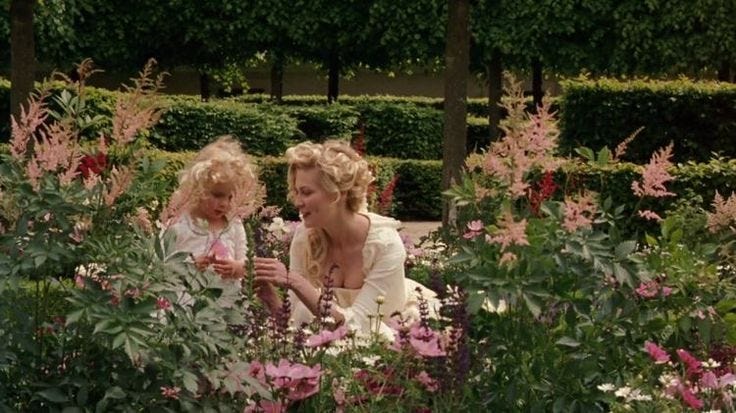
Marie Antoinette (2006)
Consumers are feeling scammed by luxury
It’s important to note that the demand curve of a luxury product doesn’t just keep going forever. There is a ceiling where an inflated price sets of our alarm bells, and our brains go 🚨SCAM🚨.
The luxury goods industry has found immense growth by following the logic of raised prices = more demand. But the logic works only as far as the consumer is buying into the fantasy of the product, or finds it instrumentally valuable for their conspicuous consumption and leisure i.e., sees the product as something that sends the ‘right’ signal.
In this sense, luxury pricing is a collective act of meaning-making. The inflated price is desirable insofar as everyone else accepts its desirability.
But now, for the first time in years, the pool of luxury consumers has shrunk, although on the surface level the industry’s revenues have remained more or less level. This means that fewer people are buying more luxury, and the so-called aspirational buyer has tapped out of the chase.
There are many reasons why, but to name a couple: dupes and counterfeits can now provide the same signals, and the quality of luxury goods has stagnated (or in many cases decreased) despite steadily climbing prices, leaving consumers paying more for the exact same product (the price of a Chanel Medium Classic Flap has doubled in the past decade from $4,900 to $11,700 in the past decade)
At the same time (or perhaps as a result of it), spend is going toward experiences much faster than tangible goods, and luxury hospitality is one of the most resilient segments in this category – and I have my hypothesis why this is the case!
Luxury as scarcity
As I teased in the beginning, I believe that there is more to luxury than its economic definition.
The word “luxury” entered the English language around the 14th century, and originally meant excessive indulgence in bodily pleasures. While the ideas of abundance and excess are inextricably tied to luxury, scarcity and rarity are likewise its constituents.
Scholar Jean-Noël Kapferer describes the state of the luxury industry today as abundant rarity, in which products are manufactured at enormous scale, while their perceived rarity is largely an illusion created through carefully constructed marketing strategies. Luxury brands cultivate worlds that evoke scarcity and exclusivity in consumers, even as their production processes increasingly resemble those of mass-market industries.
Now that almost any physical product can be reproduced, replicated, or fabricated, hospitality finds itself in a rather favorable position. As a product, hospitality is inherently perishable in that it exists only once, here and now, in a specific encounter between particular people – and then it is gone.
Human attention, a pillar of true hospitality, is becoming an increasingly scarce resource in an overstimulated world saturated by slop. It cannot be scaled or mass-produced without compromising its very essence for the sake of “abundant rarity”.
The human as luxury
To state the obvious: we, as human beings, are constrained by time. It’s a resource that, once given, cannot be regained, but it is this finitude that makes it valuable.
This is also what makes human craftsmanship, honed over decades through knowledge that is passed down through generations, a true source of luxury. The same goes for rare materials, such as a gemstone that took millions of years to form, brought to life by the hands of someone seemingly channeling the infinite (we’re huge fans of beauty here) through their own finite being (and I have an almost infinite admiration for fine jewelers, so much so that at one point I wanted to become one).
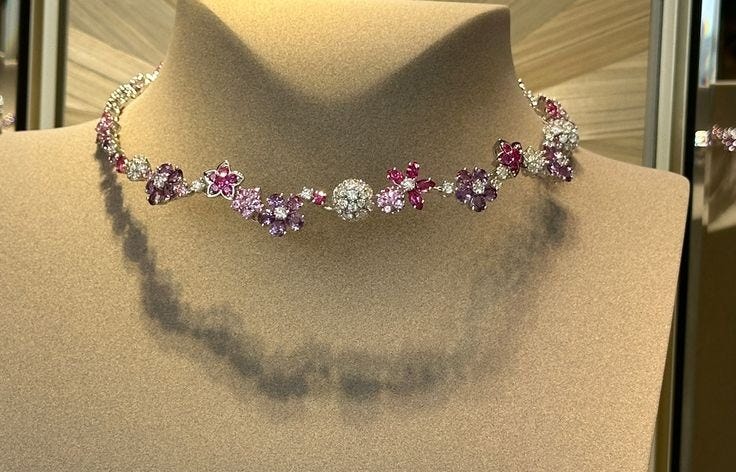
Time is becoming ever-scarcer, as humans are expected to be more efficient and optimized, produce more, consume more. Our attentions are pulled into a myriad of directions.
I think true luxury is something born out of a mind that has had room to wander, dream, mull over, and hands that have repeated a motion so many times that the movement is honed to perfection. This is real substance, real luxury, and increasingly so, as it is becoming rarer by the minute to have the breathing room and space to do things well.


A lot of the luxury industry is now built on selling a narrative of the time and space devoted to their creations. But rarely is this the case anymore. Creatives and artisans are pushed into corners, asked to generate and produce like machines.
Hospitality staff are likewise overwhelmed with the expectations of efficiency, which leaves little room for real attention placed on the guest. I do believe truly beautiful things come from being able to devote yourself fully to the craft and task at hand.

The luxury demand curve without substance is a mirage
The luxury industry has pushed price increases for the sake of price increases to its limits, which leads to the rising importance of rarity and scarcity to justify the price.
Which brings me to Spinoza, who ends his Ethics (1677):
“But all things excellent are as difficult as they are rare.”
Spinoza was writing about the path to freedom of the mind, definitely not about luxury or hotels, let alone luxury hotels. But there is no other sentence that better encompasses what true luxury is to me.
Excellence does not come from price hikes and cheaper manufacturing costs or prompting AI; that’s easy.
Excellence, the substance so often missing from luxury today, comes the hard way: by training people for years, by giving them the time and breathing room to do their jobs well, and by refusing to take shortcuts.
And I’m sorry to say, achieving excellence is difficult. Which is exactly what makes it rare, which is exactly what makes it luxury.
So, wtf is luxury? It’s what cannot be fabricated at scale, it’s the unscalable worth protecting.
This week’s letter was born out of a personal pain of mine of not having the space, the breathing room, to do the things I want to do well. But to be fair, my idea of well is getting to spend 2-15 consecutive years on one project at a time with a mysterious source of income supporting my endeavors.
I just think everything we do would deserve more time, especially if we’re talking about luxury products – because quite frankly, they are nothing without it.
I hope you enjoyed this week’s musings. Like always, I want to hear your thoughts and whether I’m the only one pained by the current state of affairs:
See you next week,
Emma
Your article makes me think about Morgan Housel, who wrote The Psychology of Money. In essence, he sees luxury as the ability to do what you want, when you want, with whoever you want. I know that's not exactly what you're talking about here, but I think there's an interesting connection. He (and I?) see luxury as having control over time. You're talking about luxury as the care and love that come from someone choosing to devote theirs. In both cases, perhaps the real luxury isn't money or extravagance, but something far scarcer: TIME, and what we choose to do with it?
Loved this piece!!
One of the greatest paradoxes of luxury hospitality is that the more we invest in the visible elements of luxury, the easier it becomes to overlook what truly creates it.
Architecture, design and materials can establish a setting, but they cannot replace human judgment, genuine attention and the ability to anticipate a guest’s needs.
And this is where leadership becomes essential. Creating exceptional hospitality means building a culture in which people have both the expertise and the time to care.
Perhaps the ultimate luxury is not simply the time a guest gains, but the care someone else has invested to make that time extraordinary.
Thank you, Emma, for such a thought-provoking perspective.