

"Life can only be understood backwards; but it must be lived forwards."
- Søren Kierkegaard
Dear guest,
In order to see what’s ahead of us, we must understand where we come from.
Hospitality is one of the longest-standing industries in the entire world, and you can tell. The industry has its quirks and is often deemed slow to innovate, but at the same time, it stands on a rich and multifaceted history filled with incredible stories and juicy details.
Now, I’m not a historian; just a philosopher who happens to be neck-deep in hospitality, and who is still very much trying to figure out what it is and means (if you have been here for a while, you know that we keep tackling the question from any and every direction).
History is never a bad place to start; alas, join me on this journey over millennia.
★★★
The mysterious history of the hotel
★★★
Welcome to Turndown Service, where we immerse ourselves in an experiential detail or sentiment.
In this letter: 5,000 years of hospitality in one sitting. Buckle up!
Knock knock. Who’s there?
When we talk about hospitality, we are often referring to one of two things: 1) the moral notion of hospitality, or 2) the transactional notion of hospitality.
The first commercial inns appeared in Mesopotamia around 3000 BC, and they were best described as stripped-down-bare-essentials. This was a purely transactional configuration of a place to not die on the road.
To contrast this dynamic of you give me coin, you get roof over your head, there is the understanding of hospitality in its moral and sacred sense, that far predates the understanding of hospitality as a transaction
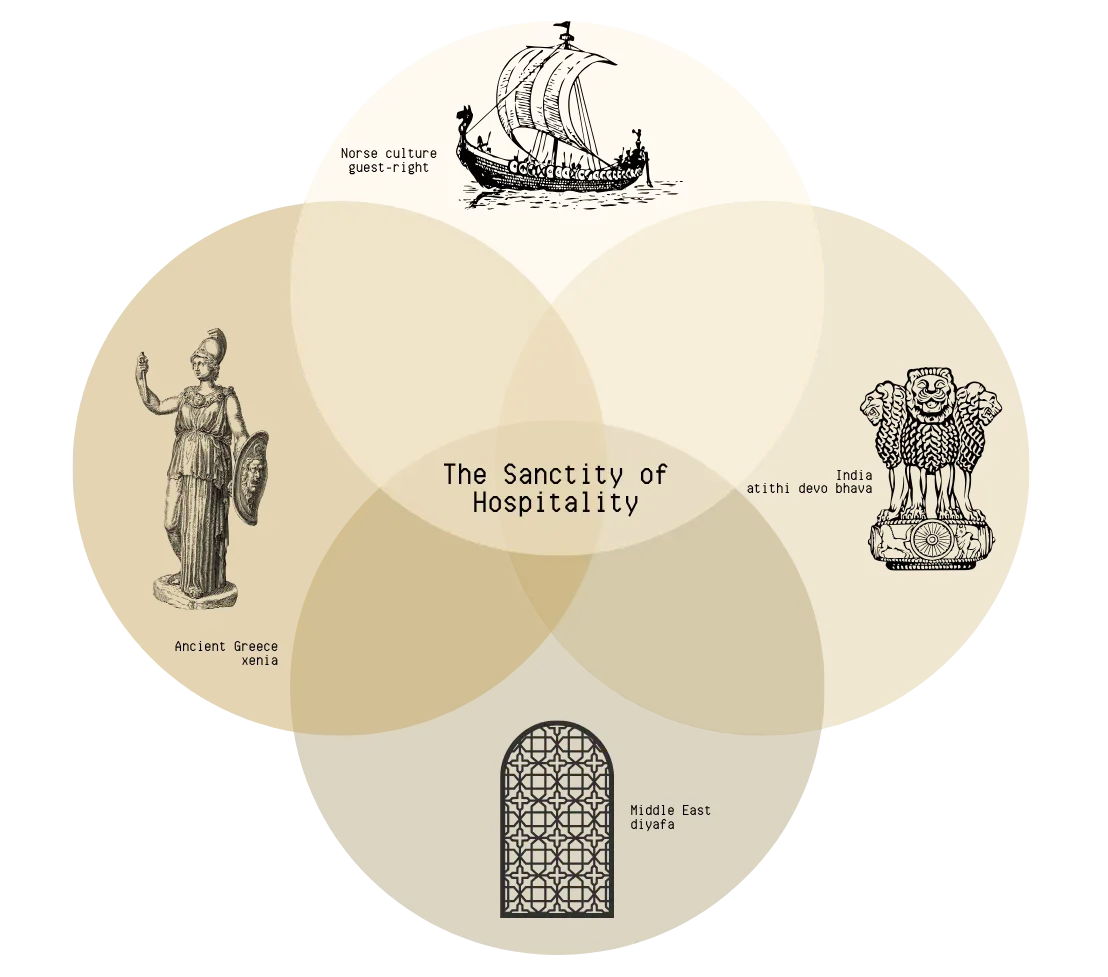
Some traditions that came to the same conclusion independent of each other:
Ancient Greece: xenia, the sacred duty to welcome strangers under the protection of the big guy Zeus. If you violate it, you get struck by lightning or suffer an equivalent divine punishment.1
India: the principle of atithi devo bhava declared that the guest is god.2
Middle Eastern philosophy: diyafa as a law mandated three days of unconditional hospitality for friend and foe alike.3
Norse culture: guest-right was so sacred that violating it was considered worse than murder (also discussed in my piece on medieval hospitality).4
With this in mind, let’s look at some of the most important events and eras in the history of hospitality.
The Roman Empire
Along their imperial roads, the Romans built a network of hospitae and mansiones, dedicated accommodation for travelers, that became the first wider network of hotel-like establishments.
By all accounts, this system also happened to be utterly dreadful. The reputation of Roman inns was in fact so bad that Cicero, who was one of the most well-travelled men in the entirety of the Roman Republic, completely refused to stay in them, preferring to do the historical version of couch surfing instead.
The poet Juvenal complains about the noise, the smells, the company, and stolen belongings in his records. He writes:
"The sick die here because they can't sleep... For when does sleep come in rented rooms?" - Juvenal
Yet these establishments were a completely necessary development, and for the average merchant or soldier on the road, it was the best option.
The world’s oldest hotel
In 705 AD, a hot spring inn called Nishiyama Onsen Keiunkan opened in Hayakawa in Japan’s Yamanashi Prefecture to serve traveling samurai and officials – and it’s still very much in operation today!
Not only is it the same location but the same family (passed along over 53 generations), which means over 1,300 years of continuous hospitality.

The hotel room with a lock (a revolution)
The modern hotel didn’t really exist until someone very brave and someone we are gravely indebted to dared to ask: what if the guest had their own room?
Before the late 18th century, sharing a bed with a stranger was pretty much standard, and you would just sleep where there was space and hope for the best. Privacy was not yet a real consideration.
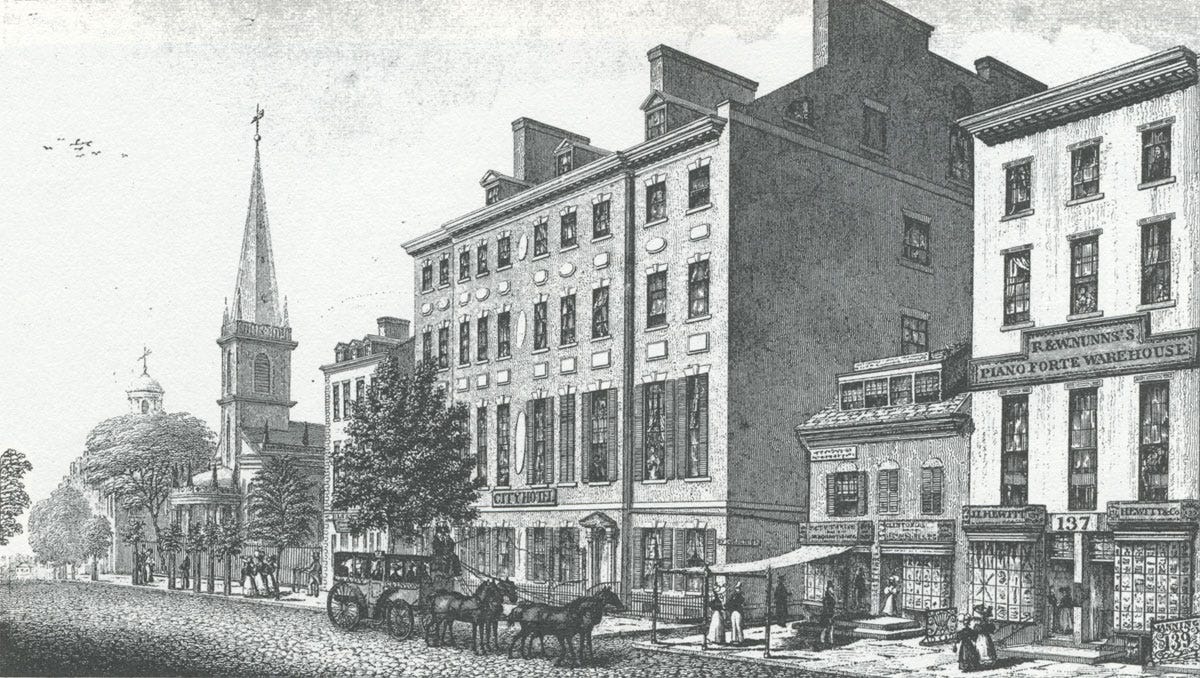
The City Hotel in New York opened in 1794 was the first American building designed for the sole purpose of being a hotel, and it already carried loads of resemblance to hotels as we understand them today. There was a ballroom, a bar, a library, and public parlors.
And yet, NO LOCKS 🚫🚫🔒🔒
It was only in 1829 when the Tremont House (also called America’s first luxury hotel) opened in Boston that you could lock the door behind you.
The birth of the luxury hotel: enter Mr. Ritz
César Ritz was born in 1850 in Switzerland, the promised land of hospitality (I’m biased as this is where I got my hospitality education).
He was the youngest of thirteen children of a farming family, and wasn’t very successful in the myriad of endeavors he undertook (he was almost like Barbie in that there was no career he hadn’t tried).
In 1867, at seventeen, he left Switzerland for Paris on the eve of the Universal Exhibition, which was a move that ultimately landed him in the world of hospitality.
By 1877, at twenty-seven, he was managing the Grand Hôtel National in Lucerne, and by 1889, he was running the Savoy Hotel in London which was arguably the most important hotel in the universe at that time.
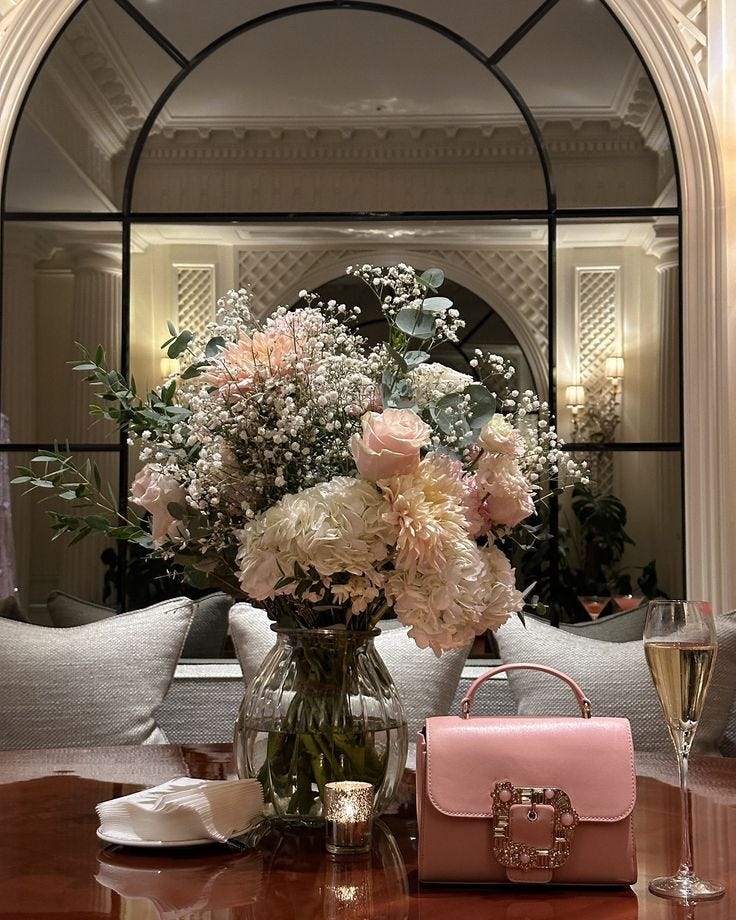
The Savoy was already revolutionary in that it was the first hotel entirely lit by electricity (the Tremont House was partly so), the first one with lifts running on electricity, and the first one with private bathrooms.
But there is a tier above revolutionary, which is legendary.
Ritz partnered with Auguste Escoffier, the father of modern French cuisine, and together they ended up rewriting the social rules of London. Before Ritz, public dining was a big no-no, a disgrace, embarrassing, especially for women.
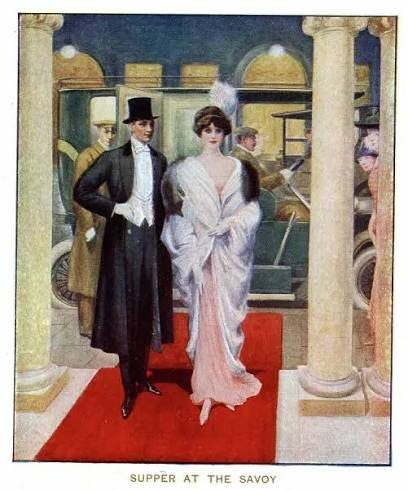
Because of Ritz’s influence, it was no longer scandalous, as he introduced after-theatre dinners at the Savoy and made it normal for couples to eat together in public (one of the greatest joys of life, imagine not being able to do that).
He is the godfather of cosmopolitan London nightlife, thanks to the Savoy dining room.
A fun fact
In 1897, a young Italian named Guccio Gucci arrived in London worked as a bellhop at the Savoy. The unprecedented level of luxury he witnessed there inspired him to found his namesake brand.
Or rather, there’s this story of how he ran the elevator at the hotel and had loads of time to study guests’ luggage, and decided he could do better.
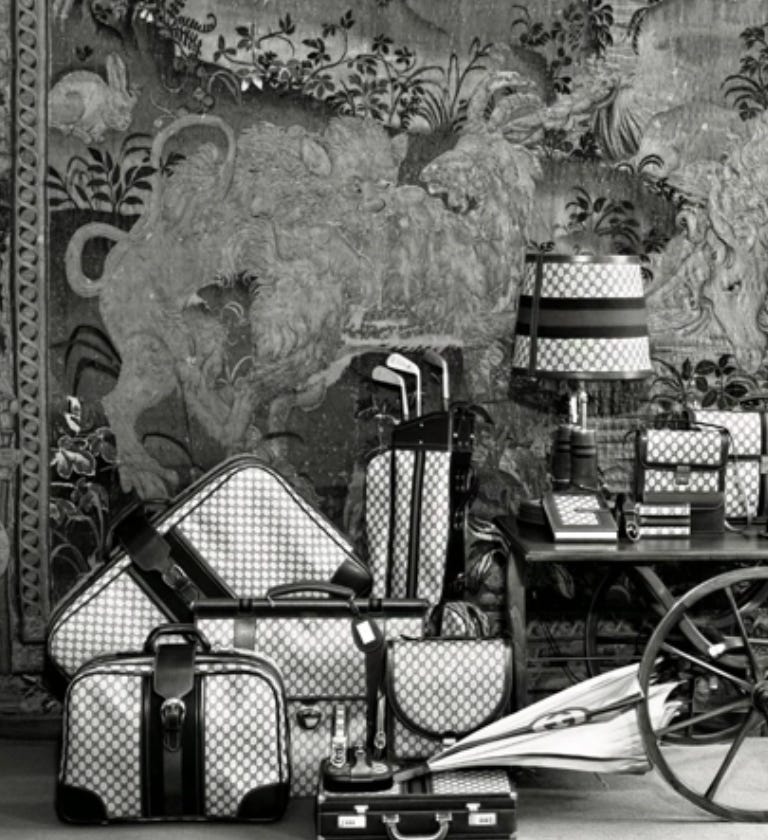
(In any case, I’ve said it before and I’ll say it again, fashion loves to take from hospitality.)
The first Ritz is opened
Right before the turn of the century in 1898, César opened his own hotel: the ever so legendary Hôtel Ritz in Paris on Place Vendôme.
He raised the bar of luxury hotels to an unseen level with en-suite bathrooms and telephones in every room, and it was without a doubt the most luxurious hotel in the world.
As with many success stories starred by men, there was a very clever woman behind it, who in this case was César’s wife Marie-Louise Ritz.
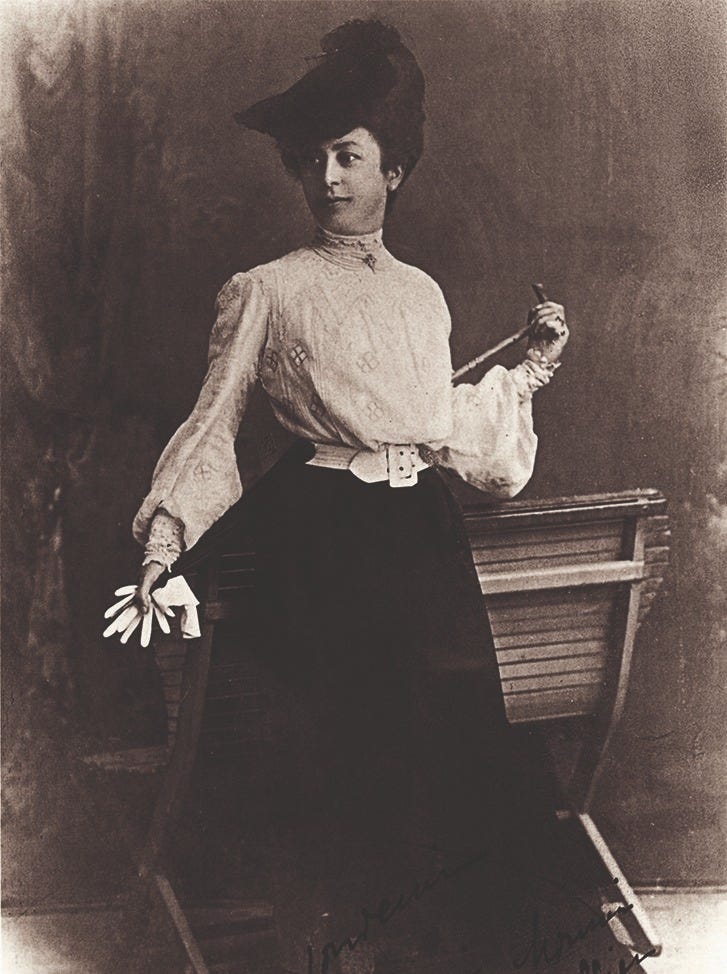
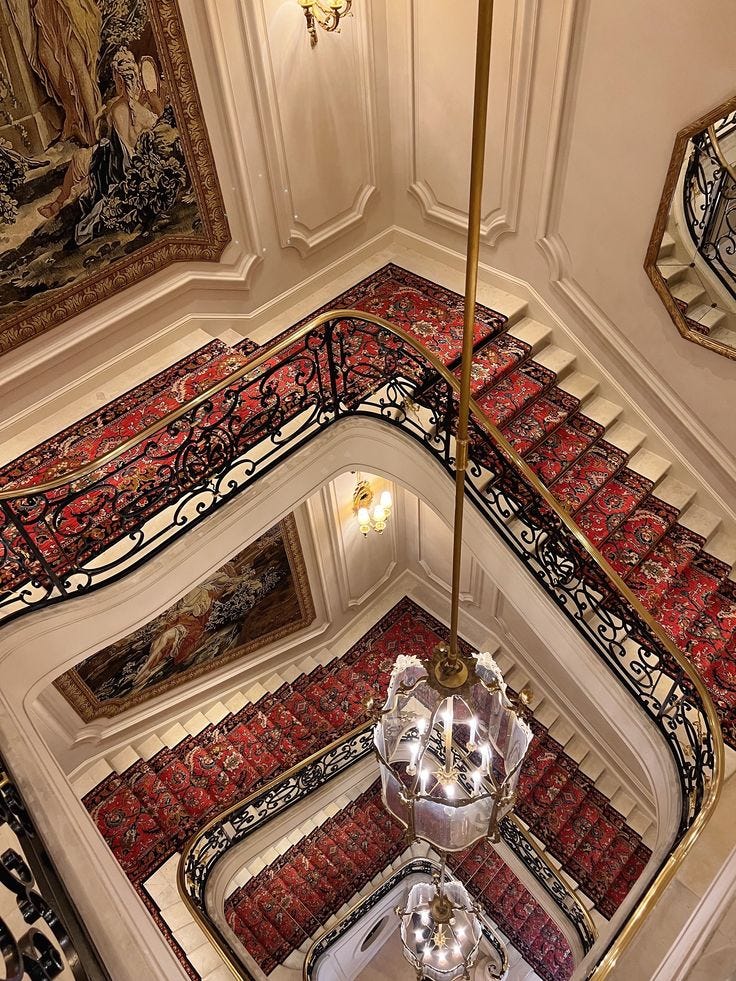
She designed the staircases to be wide so that women in gowns and heels could descend gracefully, implemented indirect lighting because direct light is harsh on faces (genius), she created a shopping gallery inside the hotel so that guests never had to leave (the mother of brand extensions), and just generally thought about all the seemingly minute details which ultimately make up exceptional experiences.
And she was obviously the one who chose the iconic peach-colored towels for the hotel, because peach flatters the complexion of the person drying their face (I bow down to this lady and aspire to her level of aura).
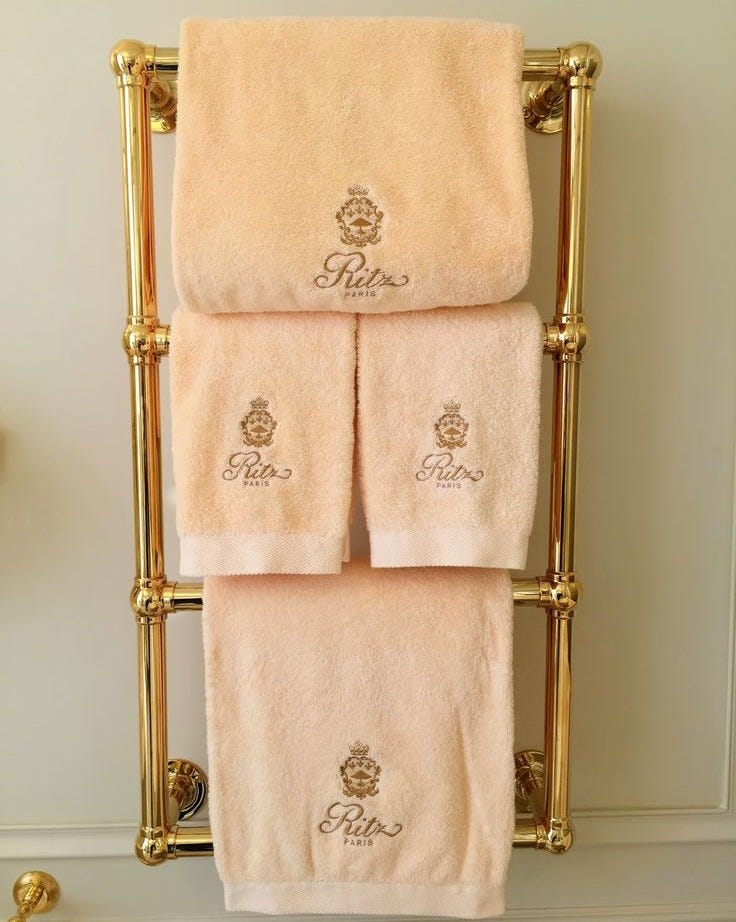
Marie Louise seemed to understand one of the golden rules of hospitality: all touch points at a hotel, whether they be staff interactions or objects, directly communicate whether you thought about the guest or flat out ignored them, and there is no in between.
When César suffered a nervous breakdown in 1902 and never fully recovered, Marie-Louise took over the management of the Ritz hotels in a world where she was sometimes excluded from her own business meetings for the fact that she was a woman. She continued to run the empire until and after César’s death in 1918.
The Ritz name entered the dictionary, and “ritzy” means ostentatiously luxurious.
The birth of the hotel chain
The 19th century came with a slew of big structural changes for the industry. Names such as Conrad Hilton, Kemmons Wilson, and J.W. Marriott emerged as the American hotel chain pioneers with the greatest promise for hotels yet: predictability.
Before the standardization that chains brought about, you would never know what you were getting into when checking in. A family inn (let alone a roadside motel) could either be clean and comfy, or an absolute hell hole. Naturally this risk still exists, but it’s mitigated by public reviews.
In 1952, Kemmons Wilson founded Holiday Inn after a family road trip where he was so appalled by the inconsistency of American motels that he decided to make every room identical, with the same bed, same towels, always affordable, and before all else, predictable.
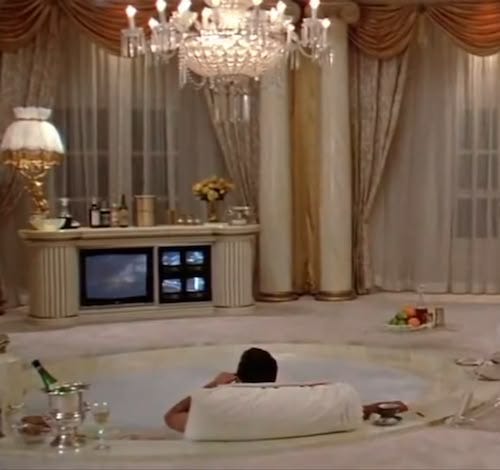
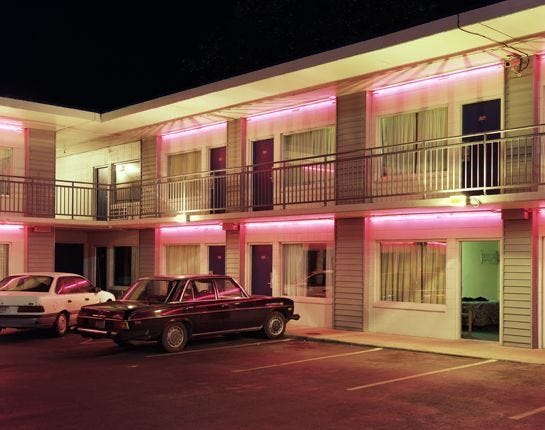
Now travel accommodation was democratized, and people who couldn’t afford the Ritz would know what to expect from their stay, and be able to count on not having their shit stolen.
At the same time, a snowball of standardization started rolling downhill as brand guidelines and SOPs slowly became the baseline. This foreshadows what we know as the great beige-ification that’s happening in the hotel world today.
This is when the hospitality industry in the way we understand it today was born. And if not before, now is when it had finally drifted far, far away from the devoted and sacred.
The boutique hotel and return of love
The pendulum must always swing the other way.
In 1984, the men behind the legendary Studio 54, Ian Schrager and Steve Rubell, opened Morgans Hotel in New York – a very demure establishment sans signs on the building, with interiors by Andrée Putman. You could never confuse this place with a Hilton.
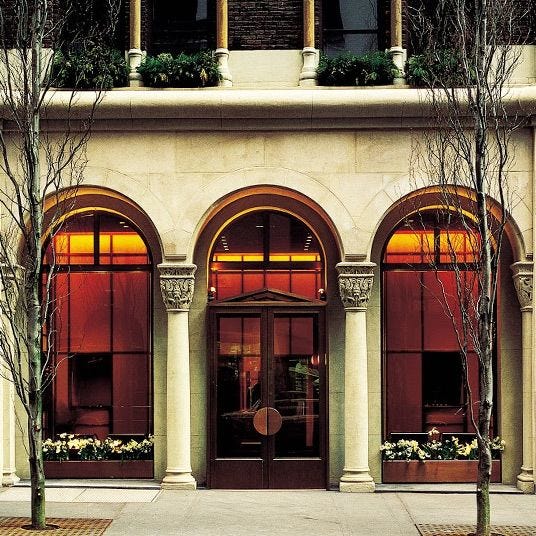
This, ladies and gentlemen, was the first ever boutique hotel, which was the counter-movement to the already-rampant sameness in the hotel world. Schrager saw that the hotels in Europe were still non-uniform (that also often had way longer histories behind them than American hotels), and wanted to rage against the machine. A hotel should feel intentional, and a hotel should surprise you, he proclaimed.
More births of icons ensued: Adrian Zecha founded Aman in 1988, which has become known as the epitome of luxury hospitality (and that is currently under some media scrutiny – there has been many takes on this already, let me know if you want me to discuss it too).
In any case, art and intention started re-entering the space, and with that, the essence of hospitality.

Places like Ett Hem or any of Belmond’s properties are not descendants from the Holiday Inn, but part of the same lineage of the monastery guest houses and ancient ethical pacts.
What has even changed?
And here we still are, lifetimes later, asking the same question: is the guest a transaction or a responsibility?

For the past hundred years, propelled by globalization, the industry has undergone very consequential structural changes, and in no way do I believe that the winds of change are done with.
With AI, even more functions in hotels can be automated, and consequentially, stays can become even more impersonal (and to be clear, that’s not necessarily a bad thing, not every hotel has to be a shrine of devotion).
At the same time, humans are craving experiences of care and belonging, and luxury hotels that succeed at building worlds that resonate are in more demand than ever.
The transformation economy, which we have talked about before, is asking us whether hospitality could be more than an experience, and if it can change people (I think you know my answer is absolutely). Wellness (the bad W-word that no longer means anything) questions if hotels can be vessels for healing. Moreover, could hotels be the solace in a world where third places are dwindling and people feel lonely?
There is also a conversation to be had about the almost mythical status of luxury hospitality, which is what now enables hotels to command over $2,000 nightly rates (entry level), which used to be unheard of. Now that even Aman’s facade of perfection is starting to crumble, can anyone live up to those expectations? Especially at scale?
To me, the hotel has always been more than a building with beds or a roof over your head. At its simplest, it’s safety and life support, and at its best, it’s a complete rewiring of identity and a refocus towards the beautiful.

I hope you enjoyed this week’s letter, which is an undeniably reductive account of a 5,000 year-old industry (and tradition!!!!). But I happen to believe that the details that stick out to us and storylines that pique our interest are always worth exploring.
If you love nerding out over hotel history, I recommend listening to the Hotel History Podcast !
As always, I would love to hear your thoughts and any fun stories or important turns I may have missed (I know there are many).
Stay ritzy,
🔑 Emma
Thoroughly thoroughly enjoyed reading this one! 😍 I feel a little stupid for not knowing that Marie-Louise Ritz contributed immensely to the Ritz, helping manage and expanding the hotel legacy. Also omg the peach towels were HER??? Love it. As always, women as co-creators are routinely sidelined / rarely discussed because historical narratives heavily focus on their male counterparts! Idk if it’s the cultural bias of the era or the cult of the “great man” or something else. Regardless, thanks so much for mentioning about her, Emma, I learnt something new today.
Fantastic post! Illustrating perfectly why we’re so obsessed with this subject. 😍🤩